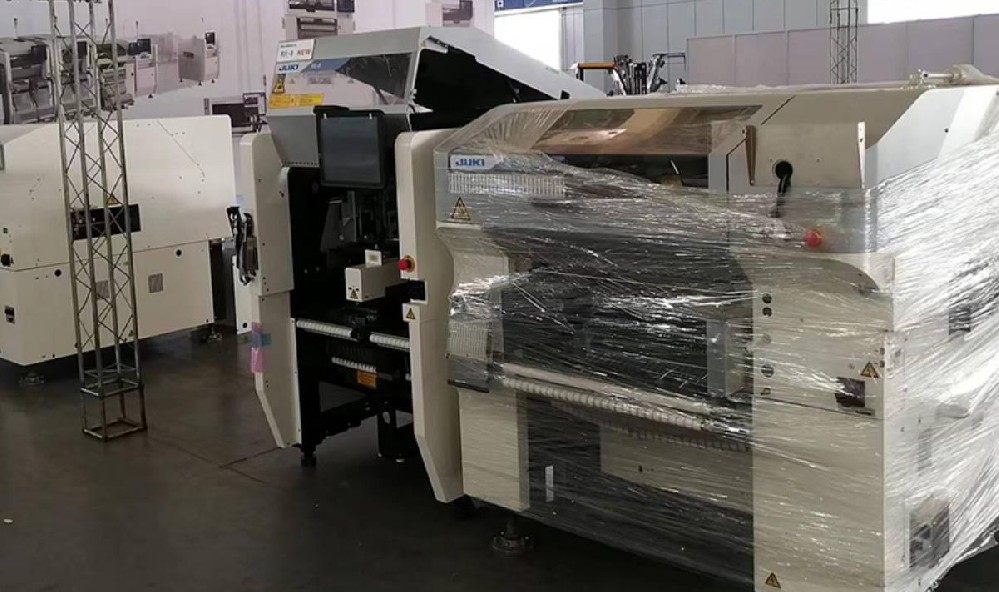
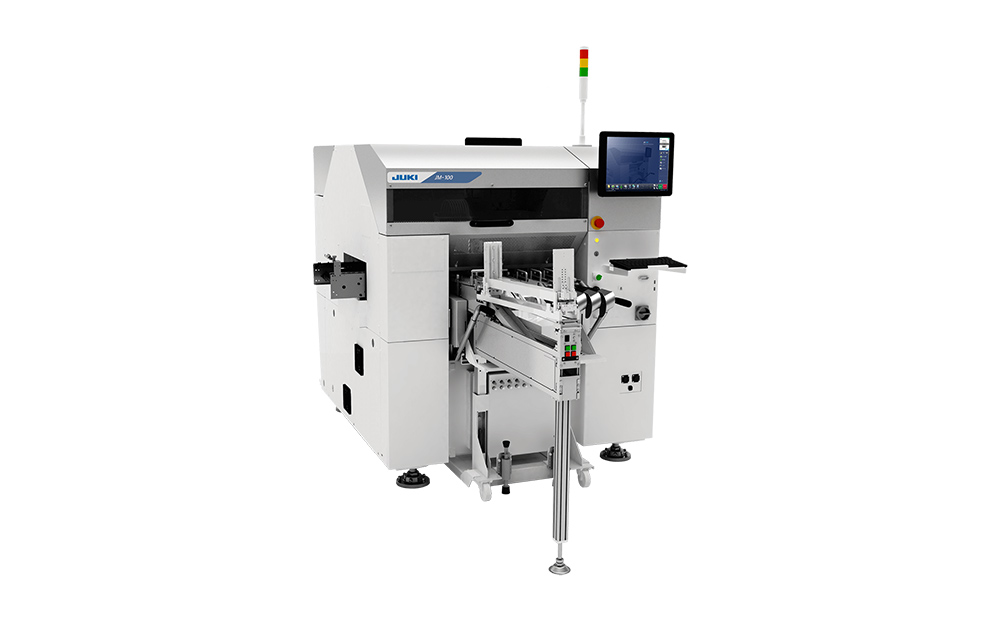
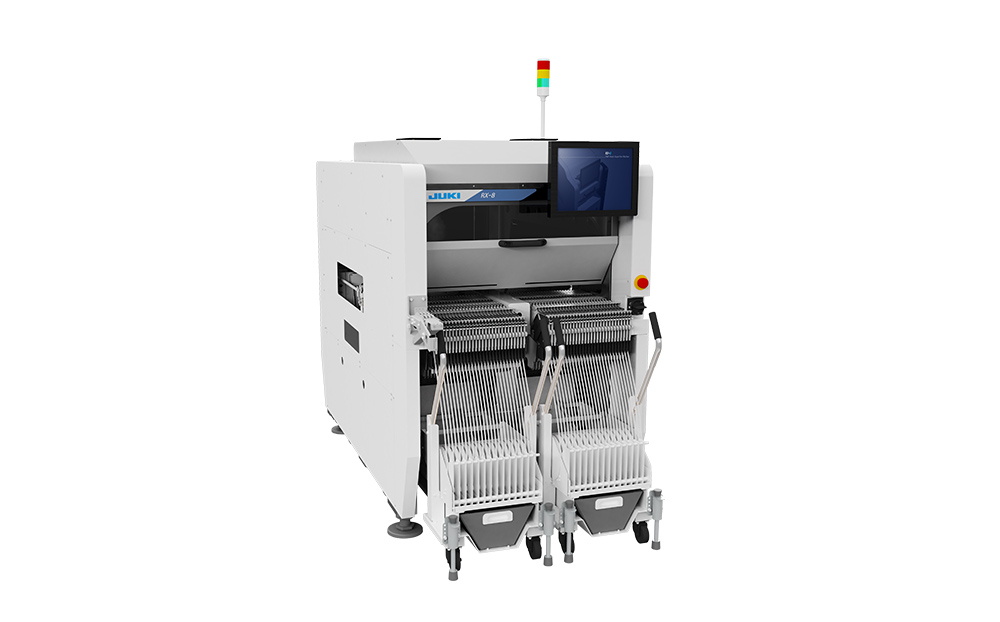
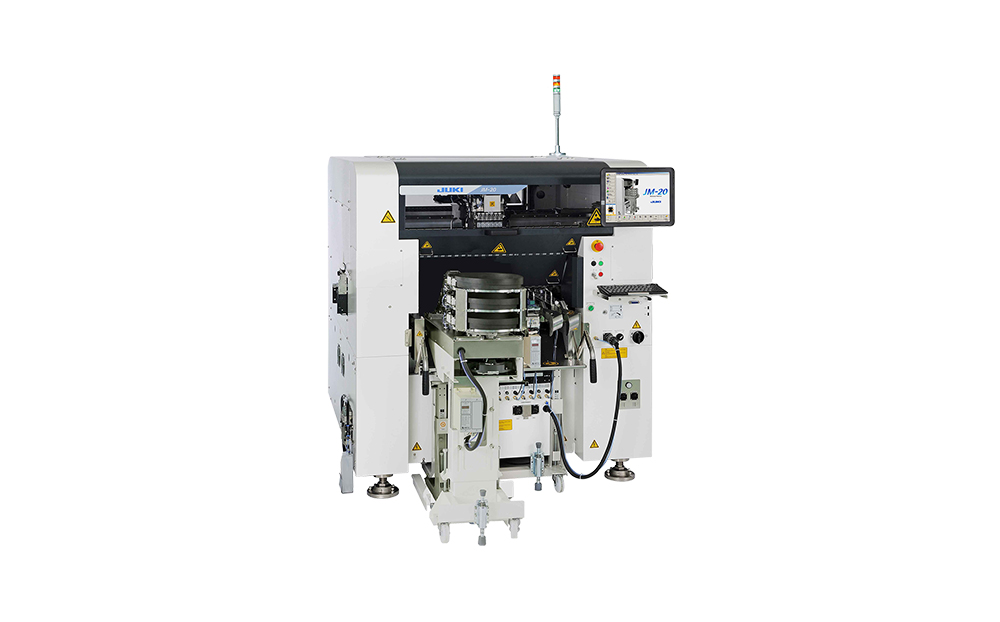
What is a Placement Head:
The picking, placing and moving of components on a chip mounter are all completed by the placement head, which is one of the core components of the chip mounter. As the main moving and working part of the chip mounter, the placement head varies in quantity and is equipped with AOI depending on the machine model.
Working Principle of the Placement Head:
The placement head has functions such as angle rotation, lifting and lowering, and vacuum suction. The working process is as follows: the placement head activates vacuum suction, the lifting mechanism lowers the placement head to the feeding position of the feeder; after picking up the component, the placement head rises and captures images through a high-speed camera; finally, it moves above the PCB to the component placement position, the placement head descends to the component coordinate position on the PCB, the vacuum is turned off, and then the placement head rises.
Differences Based on the Number of Placement Heads:
The number of placement heads is generally an even number, such as 2, 4, 6, 8 or 12 heads. A larger number of placement heads means more nozzles can be installed—after all, different-sized components require different nozzles for pickup during the production of a product. Similarly, a higher number of placement heads results in fewer operation cycles. For example, 80 components can be placed in 10 cycles with 8 heads, whereas 20 cycles are needed with 4 heads.
Safety Protection of the Placement Head:
When the machine is running fully automatically with the cover closed, the placement head reciprocates significantly back and forth at high speed and inertia. Although the equipment will automatically operate at a reduced speed for protection when the cover is opened, risks of personal injury and machine collision still exist. The main risks include: external collision damage to the placement head caused by improperly installed feeders or feeders that suddenly lift up; personal injury caused by accidental software operation that activates the movement of the placement head while operators are installing feeders or performing other work inside the machine.