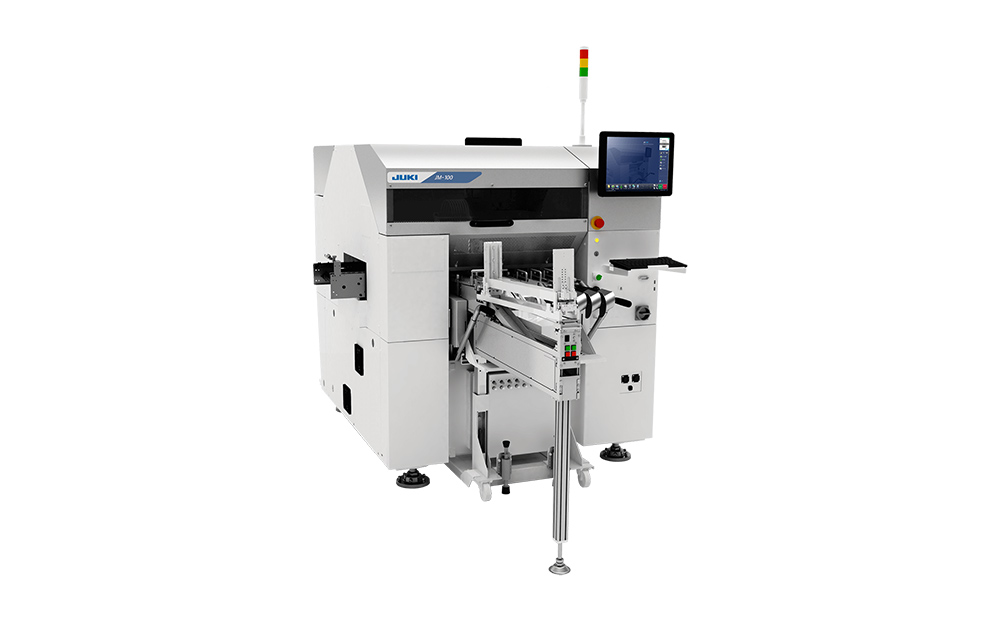
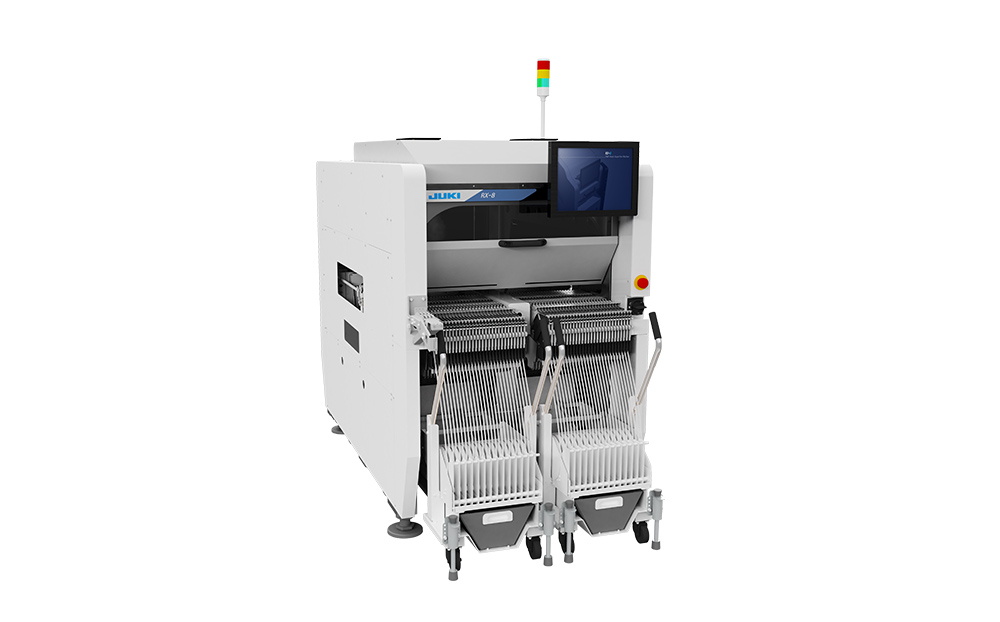
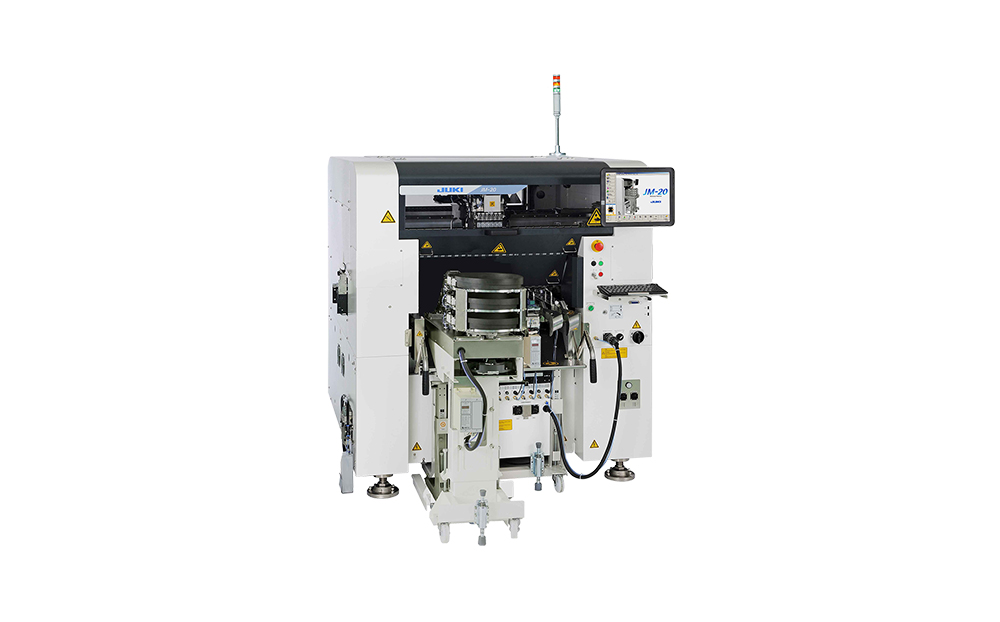
With the current inflation and rising labor costs, enterprises regard improving production efficiency and reducing costs as top priorities. Then how to reduce material loss caused by component rejection, optimize production efficiency and lower costs? Experts from Boyu Electronics, the authorized agent, give you sincere answers. Taking JUKI chip mounters as an example, we will comprehensively introduce the common faults and troubleshooting solutions of JUKI chip mounters below.
JUKI Chip Mounter Fails to Operate
Troubleshooting Solutions: First, check the power supply to see if the plug is properly connected and if the voltage meets the requirement. The chip mounter cannot be started if the voltage is insufficient. In rare cases of internal machine faults, contact the relevant engineers for handling.
JUKI Chip Mounter Overheats
Troubleshooting Solutions: The issue of overheating has been mentioned frequently in the past, with concerns about potential machine damage. In fact, overheating is mainly caused by overloading, which does not affect the basic operation of the machine. In such cases, it is advisable to pause the machine for a period of time before restarting it.
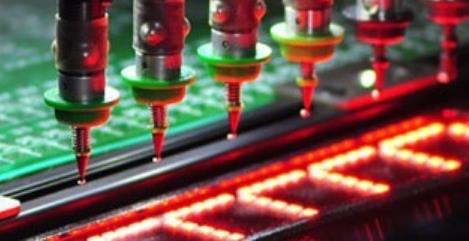
Component Rejection of JUKI Chip Mounter Troubleshooting Solutions: a. When component rejection occurs under normal conditions, first stop the operation and check whether the JUKI nozzles are deformed or clogged, and whether the raw materials are qualified. If the above factors are ruled out, check the system and programs. The interference factors are minimal when the vacuum is stable, so program issues are highly likely. b. Meet the requirements of the working site. As all practitioners know, JUKI chip mounters have strict working site requirements. If these requirements are fully met, the working efficiency of JUKI chip mounters can be two to three times higher than that of ordinary chip mounters. What are the main aspects of the working site requirements?
The power supply equipped at the working site of JUKI chip mounters must be safe. Chip mounters generally use compressed air and power supply as dual power sources, which have strict requirements for the coordination of air and electricity. Reflow soldering machines and wave soldering machines are both high-power-consuming equipment, so full consideration should be given to the impact of their startup and shutdown on other electrical equipment. The three-phase five-wire system is the safest for the power configuration system. The wiring method adopted by some enterprises that combines protective grounding with the neutral line is unscientific. Poor quality of grid power supply may cause damage to production equipment. In areas with severe grid voltage fluctuations, AC voltage stabilizers should be used for chip mounters. Attention should be paid to the balance of three-phase power load when connecting the equipment power supply.
The design of the working site for JUKI chip mounters must prioritize production safety. Since chip mounters are generally installed in a line connection mode, the production line is relatively long and the ground load is relatively concentrated. The total weight of a single high-speed chip mounter equipped with JUKI Feeders will exceed 6000kg, so it has high requirements for the load-bearing capacity of the factory floor. When chip mounters are usually installed inside the factory building, it is recommended that the load-bearing capacity of the factory floor be greater than 7.5KN/m²~10KN/m². If the load-bearing capacity of the floor is too low, the floor is prone to deformation or cracks after the chip mounters have been installed and used for a period of time, which will affect the operational reliability and processing accuracy of the equipment.
JUKI chip mounters require the use of clean and dry compressed air. The compressed air used as the power source should not only meet the technical requirements of the equipment in terms of pressure, flow rate and other parameters, but also have water vapor, oil, dust and other impurities filtered out before entering the machine.